Can You Reverse Your Biological Age? The Epigenetic Clocks of Horvath & Hannum
Chronological age is a fixed legal date, but biological age is chemically written into DNA methylation tags. Learn how scientists measure, accelerate, and potentially turn back the molecular clock of human organs.
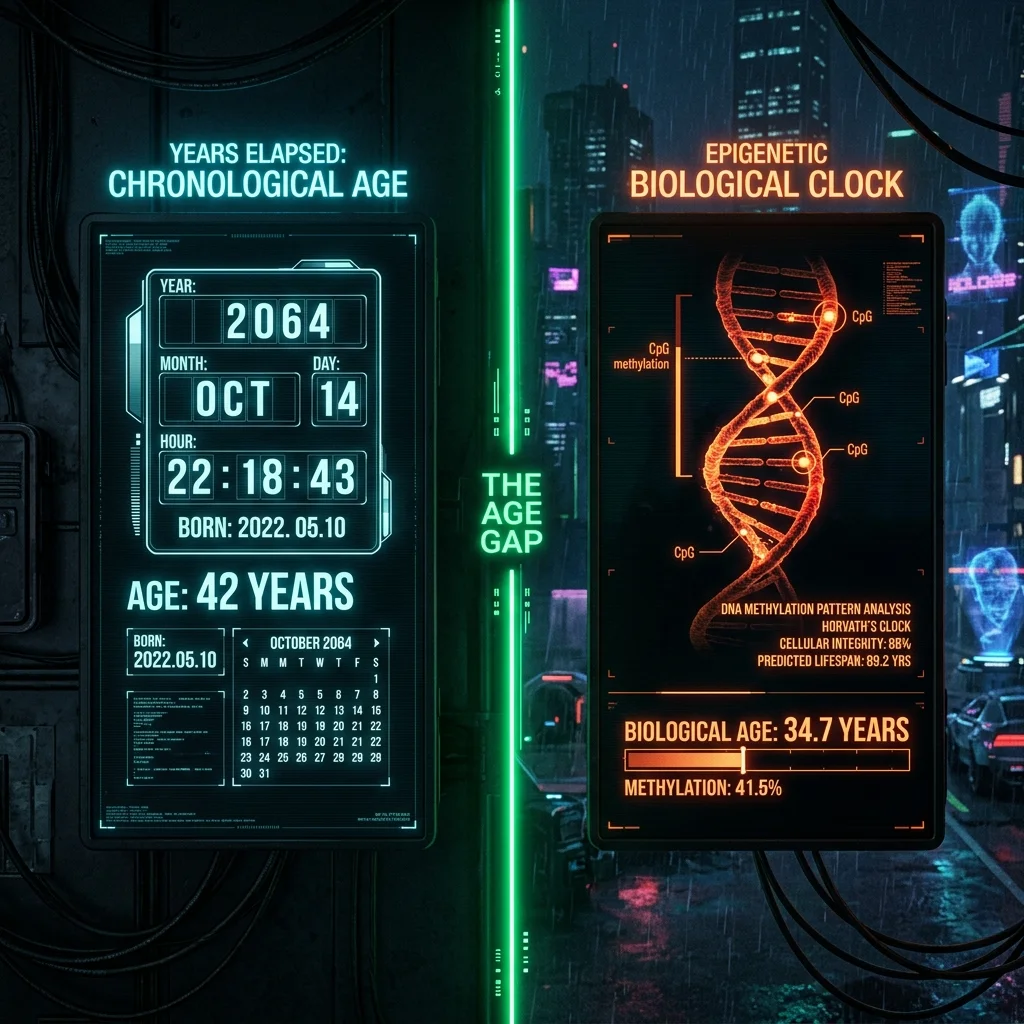
The Chemical Signature of Life: DNA Methylation
Your genome is not a static blueprint; it is an orchestra whose expression is continually modulated by molecular switches. Primary among these are methyl groups (—CH3) that attach to cytosine bases in DNA at specific cytosine-phosphate-guanine (CpG) sites. Over decades of cellular replication and metabolic wear, this methylation pattern shifts in an extraordinarily predictable trajectory.
Steve Horvath's Molecular Breakthrough
In 2013, UCLA geneticist Steve Horvath analyzed thousands of human tissue samples to construct the first pan-tissue epigenetic clock. By analyzing 353 specific CpG sites, Horvath could predict a human subject's biological age with a median error of less than 3.6 years — whether sampling blood, liver, skin, or brain tissue.
Second-Generation Clocks: PhenoAge and GrimAge
While first-generation clocks measured chronological calibration, second-generation models (DNAm PhenoAge by Morgan Levine and GrimAge by Horvath) directly forecast all-cause mortality and morbidity hazard ratios. Individuals whose GrimAge exceeds their birth certificate age suffer from accelerated cardiovascular deterioration and shortened cellular telomeres.
Is Epigenetic Reversal Scientifically Feasible?
Breakthrough clinical trials (such as the TRIIM trial led by Greg Fahy and epigenetic intervention studies by David Sinclair) demonstrated that targeted interventions — including recombinant human growth hormone, metformin, DHEA, high-intensity aerobic exercise, and polyphenolic Mediterranean diets — can successfully shave 1.5 to 3 years off measurable epigenetic age within 12 to 24 months.

DC EDITORIAL
Expert analysis on biological data, temporal mechanics, and digital wellness. Committed to providing accurate, data-driven insights for the next generation.