VO2 Max Calculator: What Is VO2 Max and Why It Predicts Longevity
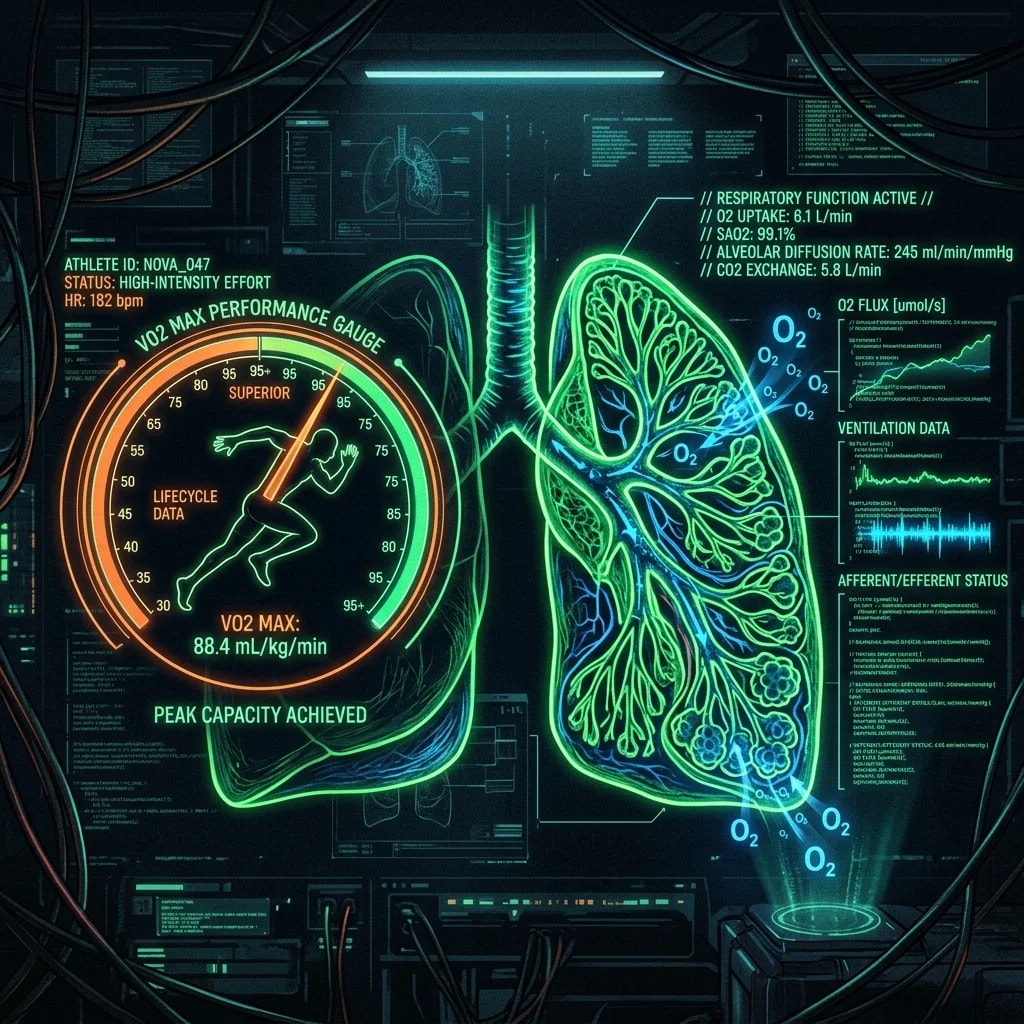
VO2 max — your maximum oxygen uptake — is one of the strongest predictors of both athletic performance and long-term survival. Research shows it's more predictive of mortality than most clinical biomarkers. Here's what it means and how to estimate yours.
What Is VO2 Max?
VO2 max (maximal oxygen uptake) is the maximum rate at which your body can consume oxygen during maximal exercise. It is expressed in milliliters of oxygen per kilogram of body weight per minute (ml/kg/min) and represents the ceiling of your aerobic energy system — the upper limit of how efficiently your cardiovascular and respiratory systems can deliver and use oxygen.
It is universally considered the gold standard measure of cardiorespiratory fitness. But beyond athletic performance, VO2 max has emerged as one of the most powerful longevity predictors in medicine. A 2018 JAMA Network Open study of 122,000 patients found that low cardiorespiratory fitness (low VO2 max) was associated with higher mortality risk than smoking, hypertension, diabetes, or high cholesterol.
VO2 Max Norms by Age and Sex
| Age | Men — Poor | Men — Average | Men — Good | Men — Superior |
|---|---|---|---|---|
| 20–29 | <38 | 38–47 | 48–56 | 57+ |
| 30–39 | <36 | 36–45 | 46–52 | 53+ |
| 40–49 | <33 | 33–42 | 43–49 | 50+ |
| 50–59 | <30 | 30–38 | 39–45 | 46+ |
| 60–69 | <26 | 26–34 | 35–41 | 42+ |
| 70+ | <22 | 22–29 | 30–36 | 37+ |
| Age | Women — Poor | Women — Average | Women — Good | Women — Superior |
|---|---|---|---|---|
| 20–29 | <29 | 29–38 | 39–47 | 48+ |
| 30–39 | <27 | 27–36 | 37–44 | 45+ |
| 40–49 | <25 | 25–33 | 34–41 | 42+ |
| 50–59 | <21 | 21–29 | 30–37 | 38+ |
| 60–69 | <18 | 18–26 | 27–33 | 34+ |
| 70+ | <16 | 16–22 | 23–28 | 29+ |
How to Estimate Your VO2 Max Without Lab Equipment
The Rockport Walking Test (1-Mile Walk)
Walk 1 mile as fast as possible on flat ground. At finish, immediately record your heart rate (beats per minute). Then use:
VO2 max ≈ 132.853 − (0.0769 × Weight lbs) − (0.3877 × Age) + (6.315 if male) − (3.2649 × Walk time in minutes) − (0.1565 × Heart rate)
Example: 40-year-old woman, 140 lbs, 15:30 walk time (15.5 min), HR 148:
= 132.853 − (0.0769 × 140) − (0.3877 × 40) + 0 − (3.2649 × 15.5) − (0.1565 × 148)
= 132.853 − 10.77 − 15.51 − 50.6 − 23.16 = ~32.8 ml/kg/min (Average for age)
The 12-Minute Run Test (Cooper Test)
Run as far as possible in 12 minutes on a flat surface. Record distance in meters.
VO2 max ≈ (Distance meters − 504.9) ÷ 44.73
Example: 2,400 meters in 12 minutes → (2400 − 504.9) ÷ 44.73 = ~42.4 ml/kg/min
Resting Heart Rate Estimate (Quick Approximation)
VO2 max ≈ 15 × (HRmax ÷ HRrest)
Where HRmax = 220 − age. Example: 45-year-old, resting HR 60:
= 15 × (175 ÷ 60) = 15 × 2.917 = ~43.8 ml/kg/min
VO2 Max and Mortality: The Evidence
The 2018 JAMA study tracked 122,007 patients for a median of 8.4 years. After adjustment for confounders, low VO2 max was associated with:
- 5× higher all-cause mortality compared to "Elite" fitness category
- 2× higher all-cause mortality compared to "High" fitness
- The mortality benefit of reaching "Elite" VO2 max fitness was greater than quitting smoking
- No upper limit was observed — every additional ml/kg/min improvement correlated with reduced mortality risk
A separate landmark study (Kokkinos et al., 2010) showed that each 1 MET (~3.5 ml/kg/min) increase in fitness reduced all-cause mortality risk by approximately 13% in men and 17% in women.
How to Improve VO2 Max
High-Intensity Interval Training (HIIT)
The most time-efficient method. 4×4 protocol: 4 intervals of 4 minutes at 85–95% max heart rate, with 3-minute active recovery between each. 2–3 sessions/week. Norwegian research shows this protocol raises VO2 max by 10–15% in 8 weeks in previously sedentary adults — the equivalent of reversing ~10 years of age-related fitness decline.
Zone 2 Training (Long, Slow Distance)
Sustained aerobic activity at 60–70% max heart rate (conversational pace). Builds mitochondrial density and capillary networks over longer timelines (3–6+ months). Essential complement to HIIT — HIIT raises the aerobic ceiling; Zone 2 builds the aerobic base. Most elite endurance athletes spend 80% of training volume in Zone 2.
Consistency Over Intensity
VO2 max declines approximately 1% per year without training after age 25, but this decline can be dramatically slowed — or temporarily reversed — with consistent training. A sedentary 50-year-old who starts consistent cardio training can achieve a VO2 max higher than their sedentary self at 35.
Track All Your Health Metrics
Open Age & Life CalculatorFrequently Asked Questions
What is a good VO2 max?
"Good" is age and sex dependent. For men in their 40s, 43–49 ml/kg/min is good; 50+ is superior. For women in their 40s, 34–41 is good; 42+ is superior. Even moving from "Poor" to "Average" produces significant mortality risk reduction.
Can VO2 max increase with age?
VO2 max naturally declines with age, but training consistently reduces the rate of decline dramatically. Well-trained 60-year-olds routinely have higher VO2 max than sedentary 40-year-olds. It can increase at any age with appropriate training — even in people in their 70s and 80s in RCTs.
How long does it take to improve VO2 max?
Measurable improvement occurs within 4–8 weeks with HIIT training. Significant gains (10–20%) require 8–16 weeks of consistent 3×/week training. Maximum trainable VO2 max in untrained individuals typically takes 6–24 months to reach.

DC EDITORIAL
Expert analysis on biological data, temporal mechanics, and digital wellness. Committed to providing accurate, data-driven insights for the next generation.