Testosterone Levels by Age: Normal Ranges, Decline Rate, and How to Optimize
Testosterone declines about 1% per year after 30—but the range of 'normal' is enormous, and symptoms matter more than numbers alone. Here's the complete guide to testosterone by age, what drives decline, and what the evidence shows for optimization.
Testosterone: Far More Than a Sex Hormone
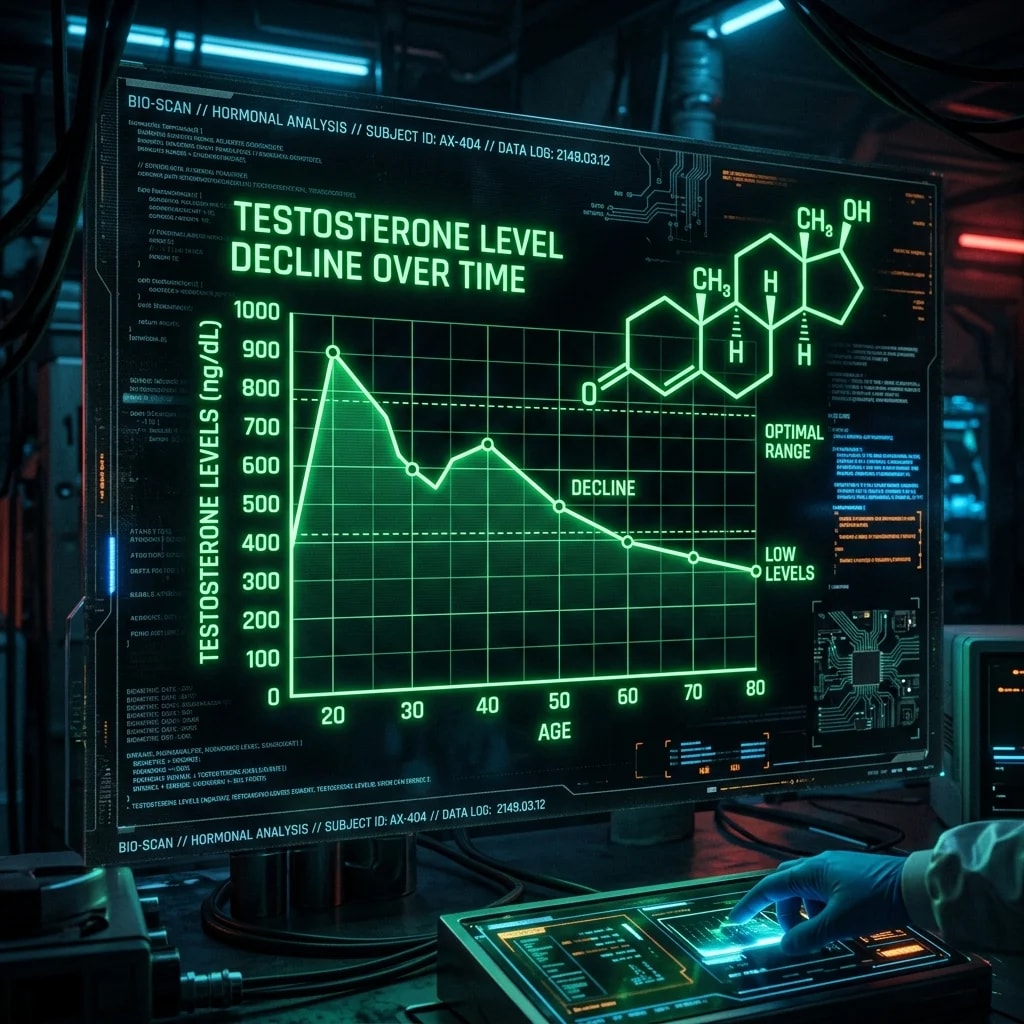
Testosterone is classified as an androgen — a sex hormone — but its role in the body extends far beyond reproduction or libido. In both men and women, testosterone regulates muscle protein synthesis, bone density maintenance, red blood cell production, cognitive function (particularly memory and processing speed), mood regulation, metabolic rate, and cardiovascular health. Its decline has ramifications across virtually every physiological system.
Understanding your testosterone context requires knowing what's normal at your age — and recognizing that "normal" encompasses an enormous range, making symptom assessment at least as important as any lab value.
Normal Testosterone Levels by Age (Men)
| Age | Total Testosterone (ng/dL) | Free Testosterone (pg/mL) |
|---|---|---|
| 20–29 (Peak) | 600–900 ng/dL (avg ~720) | 15–25 pg/mL |
| 30–39 | 500–800 ng/dL (avg ~620) | 13–22 pg/mL |
| 40–49 | 400–700 ng/dL (avg ~540) | 11–19 pg/mL |
| 50–59 | 350–600 ng/dL (avg ~470) | 9–16 pg/mL |
| 60–69 | 300–550 ng/dL (avg ~420) | 7–14 pg/mL |
| 70+ | 250–500 ng/dL (avg ~350) | 5–12 pg/mL |
Laboratory "normal" (typically 300–1,000 ng/dL) spans an enormous range. A 45-year-old man at 310 ng/dL and one at 720 ng/dL are both "technically normal" — but their physiological experiences are likely profoundly different. This is why symptoms must always accompany lab values in clinical assessment.
Testosterone Levels in Women
Women produce testosterone in the ovaries and adrenal glands, though at 5–10% the level of men. It plays critical roles in female libido, bone density, mood, and muscle maintenance:
| Age | Total Testosterone (ng/dL) — Women | Notes |
|---|---|---|
| 20–29 | 10–70 ng/dL (avg ~35) | Peak reproductive years |
| 30–39 | 10–60 ng/dL (avg ~30) | Decline begins gradually |
| 40–49 | 8–50 ng/dL (avg ~25) | Perimenopause may begin |
| 50+ | 5–40 ng/dL (avg ~18) | Post-menopause — significant decline |
The Rate and Cause of Age-Related Decline
The 1% Per Year Rule
Total testosterone in men declines at approximately 1–2% per year after age 30 — a process called andropause or late-onset hypogonadism (LOH). The key distinction from female menopause: male testosterone decline is gradual (decades) rather than abrupt, making recognition of low testosterone symptoms more difficult. Many men attribute symptoms of testosterone decline to "just getting older."
Mechanisms of Decline
- Leydig cell reduction: The testicular cells producing testosterone decrease in number and responsiveness with age
- Increased SHBG (Sex Hormone Binding Globulin): SHBG binds testosterone, rendering it biologically inactive. SHBG increases with age, meaning total testosterone tests overestimate biologically available testosterone in older men. Free testosterone (unbound) is the more clinically meaningful measure.
- HPA axis dysregulation: Chronic stress elevates cortisol, which directly suppresses testosterone production via the HPG axis
- Visceral fat accumulation: Visceral fat tissue contains aromatase, converting testosterone to estrogen. High visceral fat both reduces testosterone and increases estrogen in men — a self-reinforcing cycle that accelerates with weight gain.
Symptoms of Low Testosterone (Clinical and Subclinical)
- Reduced libido and sexual function
- Fatigue and reduced energy — particularly in the afternoon
- Decreased muscle mass and strength despite exercise
- Increased body fat (particularly abdominal/visceral)
- Depressed mood, irritability, reduced motivation
- Cognitive fog, reduced working memory
- Reduced bone density (long-term — manifesting as fracture risk over decades)
- Poorer sleep quality (testosterone influences sleep architecture)
Evidence-Based Natural Testosterone Optimization
1. Resistance Training (Strongest Evidence)
Heavy compound resistance training (squats, deadlifts, bench press) produces acute testosterone spikes of 15–30% post-workout. More importantly, consistent resistance training over months is associated with significantly higher resting testosterone compared to sedentary individuals in multiple cross-sectional and intervention studies. Track your lean mass progress with our body composition calculator.
2. Sleep Optimization (Critical and Overlooked)
70% of daily testosterone is produced during sleep — specifically during slow-wave (deep) sleep phases. A seminal University of Chicago study showed that 5 nights of sleep restriction to 5 hours reduced daytime testosterone by 10–15% in young healthy men. Consistent 7–9 hours of high-quality sleep is non-negotiable for testosterone maintenance.
3. Visceral Fat Reduction
Reducing visceral fat is one of the most powerful interventions for improving testosterone in overweight men. The mechanism is direct: less aromatase activity = less testosterone-to-estrogen conversion + improved hypothalamic-pituitary signaling. Studies show testosterone increases of 25–50% in obese men achieving significant fat loss through lifestyle intervention.
4. Zinc and Vitamin D Intake
Zinc is a cofactor in testosterone synthesis — deficiency directly impairs production. Athletes and men with high sweat rates are particularly at risk. Supplementation in deficient men restores testosterone production (but has minimal effect in men with adequate levels). Vitamin D functions as a steroid hormone precursor; deficiency (common at northern latitudes or in office workers) correlates with lower testosterone in large population studies.
5. Chronic Stress Reduction
Cortisol is the primary hormonal antagonist of testosterone — elevated chronically, it suppresses the HPG axis and reduces Leydig cell responsiveness. The same stress reduction protocols documented for aging (mindfulness, sleep, physical activity) also support testosterone maintenance through cortisol normalization.
When to Seek Medical Evaluation
Consult a physician for testosterone testing (morning total + free testosterone) if you experience:
- 3+ of the symptoms listed above persistently (>3 months)
- Sexual dysfunction not explained by psychological factors
- Significant unexplained muscle loss or bone fracture without trauma
- Severe depression unresponsive to lifestyle intervention
Know your biological baseline starting point: use our age and life stats calculator for chronological context, and our body composition calculator to assess your visceral fat risk.
Assess Your Visceral Fat and Lean Mass Risk
Open Body Fat CalculatorFrequently Asked Questions
What is a normal testosterone level at 40?
For men at 40, typical total testosterone ranges from 400–700 ng/dL, with an average around 540 ng/dL. However, free testosterone (unbound, bioactive) is more clinically meaningful — typical range is 11–19 pg/mL at this age. Symptoms matter as much as numbers.
At what age does testosterone start declining?
Measurable decline begins around age 30 at approximately 1% per year. By age 40, most men have lost 8–12% of peak testosterone. By 70, average levels are roughly 40–50% of their 20s peak in untreated sedentary individuals.
Can you increase testosterone naturally after 50?
Yes, meaningfully. Heavy resistance training, sleep optimization (7–9 hours), visceral fat reduction, and correcting deficiencies in zinc and vitamin D can restore 15–30% of age-related decline in men who are sedentary, overweight, or sleep-deprived. These interventions won't restore 20s levels, but can significantly improve symptoms and quality of life.

DC EDITORIAL
Expert analysis on biological data, temporal mechanics, and digital wellness. Committed to providing accurate, data-driven insights for the next generation.