The Science of Biological Aging: What Your Cells Are Telling You
Explore the microscopic universe within you. From telomere shortening to cellular senescence, discover the biological mechanisms that drive the aging process and what modern science says about slowing the clock.
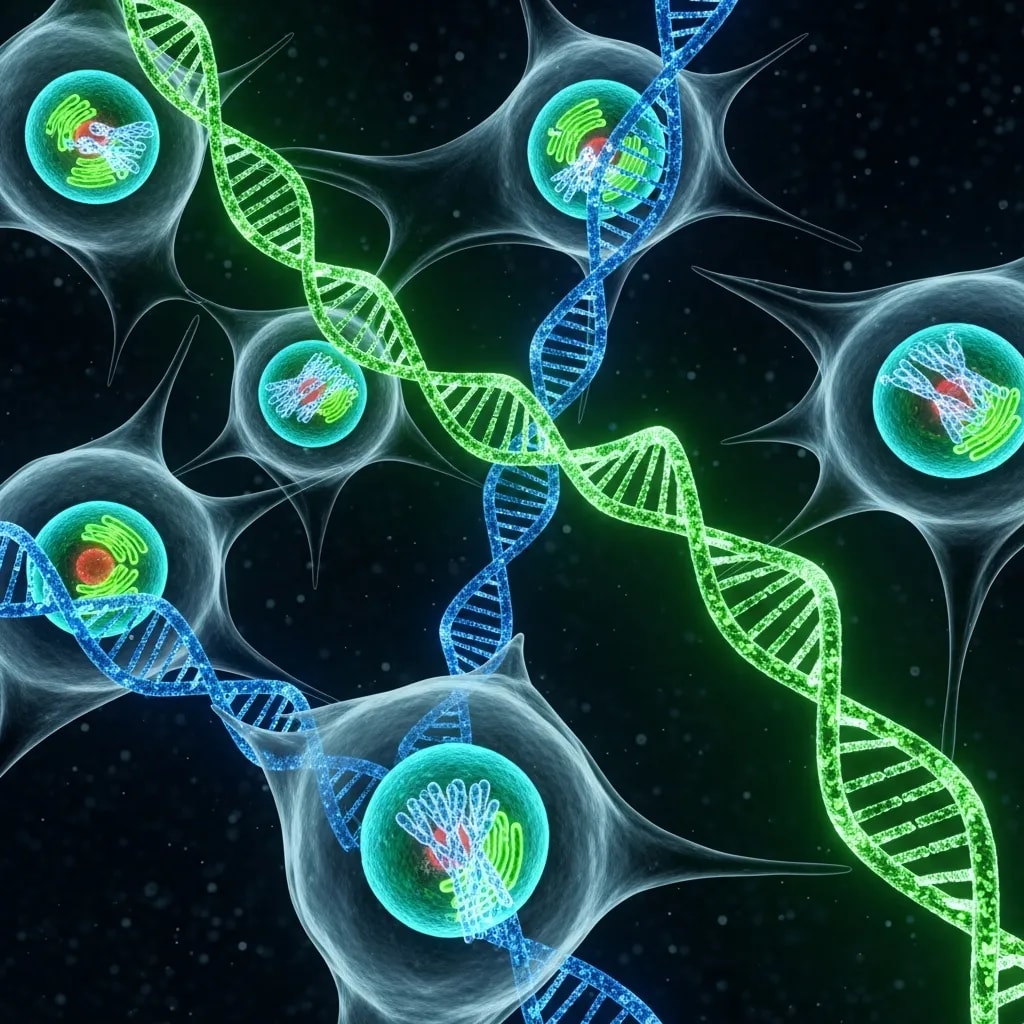
The Clock Within: Understanding Cellular Senescence
Deep within the nucleus of every cell in your body lies a biological clock that has been ticking since the moment of your conception. Unlike the chronological clock that measures your age in years, months, and seconds, this internal clock measures something far more complex: the accumulated wear, damage, and degradation of your cellular machinery.
Biological aging, or senescence, is not a single process but a symphony of interconnected molecular events — genetic factors, environmental stressors, metabolic byproducts, and the inevitable imperfection of cellular replication. Understanding these mechanisms is the first step toward taking control of how you age, and possibly slowing the process.
In this comprehensive guide, we explore the science behind why your cells age, what you can do about it, and how modern longevity research is challenging the very concept of aging as an irreversible process.
Telomeres: The Aglets of Life
At the heart of biological aging lies one of the most elegant structures in molecular biology: telomeres. These are repetitive DNA sequences (specifically, TTAGGG repeated thousands of times) that cap the ends of each of your 46 chromosomes. Their function is protective — like the plastic aglets on the ends of shoelaces, they prevent chromosomes from fraying, fusing, or losing critical genetic information during cell division.
Every time a cell divides, the DNA replication machinery cannot fully copy the very end of each chromosome (a limitation called the "end replication problem"). As a result, telomeres shorten by approximately 25-200 base pairs per cell division. Over a lifetime, this gradual shortening acts as a molecular countdown timer.
When telomeres become critically short (reaching what scientists call the "Hayflick limit," typically after 40-60 cell divisions), the cell faces a decision point: it can either undergo apoptosis (programmed death), which is the "clean" outcome, or enter cellular senescence — a dangerous "zombie" state where the cell refuses to die but stops dividing and instead secretes a cocktail of inflammatory molecules called the SASP (Senescence-Associated Secretory Phenotype).
The Nobel Prize Connection
The pivotal importance of telomeres was recognized with the 2009 Nobel Prize in Physiology or Medicine, awarded to Elizabeth Blackburn, Carol Greider, and Jack Szostak for their discovery of how chromosomes are protected by telomeres and the enzyme telomerase — a reverse transcriptase that can rebuild telomere length.
Blackburn's subsequent research at UCSF revealed something remarkable: telomere length is not purely genetic. It is profoundly influenced by lifestyle and environment. In a landmark study, she and Elissa Epel found that mothers caring for chronically ill children had telomeres equivalent to 10 additional years of aging compared to mothers of healthy children. The mechanism? Chronic psychological stress increases cortisol and oxidative damage, directly accelerating telomere erosion.
This finding shattered the notion that biological aging is predetermined, opening the door to lifestyle interventions as genuine anti-aging strategies.
What Accelerates Telomere Shortening?
- Chronic psychological stress — The strongest non-genetic predictor of telomere shortening
- Smoking — Each cigarette shortens telomeres by an estimated 7.4 base pairs. Pack-a-day smokers lose the equivalent of 1.4 years of telomere length per decade
- Obesity and visceral fat — Adipose tissue releases inflammatory cytokines that damage telomeres. Track your body fat with our Body Fat Calculator
- Processed food diet — High sugar, trans fats, and ultra-processed foods increase oxidative stress
- Sleep deprivation — Consistently less than 6 hours of sleep accelerates telomere attrition
- Sedentary lifestyle — Physical inactivity correlates with 200+ base pairs shorter telomeres (equivalent to ~10 years of aging)
What Preserves Telomere Length?
- Regular aerobic exercise — Endurance athletes have telomere lengths equivalent to being 16 years younger than sedentary age-matched controls
- Mediterranean diet — Rich in omega-3 fatty acids, polyphenols, and antioxidants
- Meditation and mindfulness — Dean Ornish's research showed a 29% increase in telomerase activity after just 3 months of comprehensive lifestyle intervention
- Social connection — Strong social networks are independently associated with longer telomeres
- Adequate sleep (7-9 hours) — Allows DNA repair and telomere maintenance processes to operate
Mitochondrial Dysfunction: The Energy Crisis of Aging
If telomeres are the countdown timer, mitochondria are the power plants — and they're failing. These tiny organelles (originally independent bacteria that were engulfed by our ancestors ~2 billion years ago) are responsible for converting the food you eat into ATP (adenosine triphosphate), the universal energy currency of life. Your body produces and recycles approximately your own body weight in ATP every single day.
As you age, mitochondria become less efficient. They produce less ATP (energy) and generate more reactive oxygen species (ROS) — essentially, molecular shrapnel that damages DNA, proteins, and cell membranes. This creates a vicious cycle: damaged mitochondria produce more ROS, which damages more mitochondria, which produces more ROS. Scientists call this the "mitochondrial free radical theory of aging."
The consequences are systemic: fatigue increases, muscle strength declines, cognitive function slows, and metabolic diseases become more likely. By age 70, mitochondrial ATP production has typically declined by 40-50% compared to age 20.
NAD+ and the Mitochondrial Renaissance
One of the most exciting developments in longevity science is the discovery of the role of NAD+ (Nicotinamide Adenine Dinucleotide) in mitochondrial function. NAD+ is a coenzyme required by nearly every metabolic process in your body. It's essential for:
- Mitochondrial energy production (the electron transport chain)
- DNA repair (via PARP enzymes)
- Epigenetic regulation (via sirtuin enzymes)
- Circadian rhythm maintenance
- Immune function
The problem? NAD+ levels decline by approximately 50% between ages 40 and 60. This decline is now considered one of the primary drivers of age-related disease.
Researchers like David Sinclair at Harvard Medical School have demonstrated that boosting NAD+ levels in aged mice (using precursors like NMN — Nicotinamide Mononucleotide and NR — Nicotinamide Riboside) can restore mitochondrial function, improve exercise capacity, and reverse many markers of aging. Human clinical trials are underway, with early results showing improved NAD+ levels, vascular function, and exercise performance.
The Epigenetic Clock: Software, Not Hardware
Your DNA is often described as your body's "blueprint" — but that's an incomplete metaphor. The real magic lies not in the DNA sequence itself (the hardware) but in epigenetics — the system of chemical tags and modifications that determines which genes are turned on or off (the software).
The most studied epigenetic modification is DNA methylation — the addition of methyl groups (CH3) to specific positions on the DNA molecule. These methylation patterns change systematically with age, and in 2013, UCLA researcher Steve Horvath made a breakthrough: by analyzing the methylation status of just 353 specific DNA sites, he could predict a person's age with stunning accuracy (±3.6 years).
More importantly, deviations from the predicted age — what Horvath calls "epigenetic age acceleration" — are strongly predictive of future disease and mortality risk. If your epigenetic clock reads 50 but you're chronologically 40, you're aging faster than average and at increased risk. If it reads 35, you're aging slower.
The revolutionary implication of Sinclair's work is that aging might be an epigenetic phenomenon, not a genetic one. He uses the analogy of a scratched CD: the music (your DNA) is still there, but the player (your epigenome) has lost the ability to read it correctly. If we can "polish the CD" — reset the epigenetic marks — we might be able to restore youthful function. In 2020, his lab demonstrated exactly this: by delivering three Yamanaka factors to the retinal ganglion cells of old blind mice, they restored vision by resetting the epigenetic clock without causing cancer. It was proof of concept that cellular aging can be reversed.
Cellular Senescence: The Zombie Cell Army
Perhaps the most insidious aspect of aging is the accumulation of senescent cells. When a cell's telomeres shorten to critical length, or when it sustains irreparable DNA damage, it enters senescence — a permanent state of growth arrest. The cell doesn't die (apoptosis), but it stops contributing to tissue function.
Worse, senescent cells actively cause harm. They secrete the SASP (Senescence-Associated Secretory Phenotype) — a cocktail of pro-inflammatory cytokines (IL-6, IL-8, TNF-α), matrix metalloproteinases (which break down tissue structure), and growth factors that damage neighboring healthy cells and can promote cancer. In essence, senescent cells are like workers who stop doing their job but continue collecting a paycheck while sabotaging the office.
By age 70-80, senescent cells may comprise 10-15% of cells in certain tissues (skin, fat, kidney). Their accumulation is now considered one of the primary drivers of age-related diseases including arthritis, atherosclerosis, type 2 diabetes, Alzheimer's, and cancer.
Senolytics: Clearing the Zombies
The most promising approach to tackling senescent cells is a new class of drugs called senolytics — compounds that selectively kill senescent cells while leaving healthy cells unharmed. The leading combination is dasatinib + quercetin (D+Q), first identified by James Kirkland at Mayo Clinic in 2015.
In mice, intermittent senolytic treatment has produced remarkable results: extended lifespan by 36%, improved physical function, reduced frailty, and delayed onset of age-related diseases. The first human clinical trials (published 2019-2023) have shown that D+Q can reduce senescent cell burden in humans, with improvements in physical function in patients with idiopathic pulmonary fibrosis and diabetic kidney disease.
While senolytics are not yet approved as anti-aging treatments, they represent one of the most tangible near-term interventions against biological aging. Quercetin (a naturally occurring plant flavonoid found in onions, apples, and berries) is readily available as a supplement and is being studied for its anti-senescent properties.
Inflammaging: The Silent Fire Within
As senescent cells accumulate and pump out inflammatory signals, as mitochondria leak more reactive oxygen species, and as the immune system itself begins to dysfunction with age, a chronic, low-grade inflammatory state develops throughout the body. Scientists call this "inflammaging" — and it's now recognized as a master driver of virtually all age-related diseases.
Unlike acute inflammation (the redness and swelling after a cut), inflammaging is invisible and insidious. You can't feel it. But it quietly damages blood vessels (atherosclerosis), brain tissue (neurodegeneration), joints (arthritis), and metabolic organs (insulin resistance, fatty liver). The blood marker most commonly used to detect it is C-reactive protein (CRP) — a test available in any standard blood panel.
The most effective anti-inflammaging strategies are the same lifestyle interventions that protect telomeres and mitochondria: regular exercise (particularly zone 2 cardio), a Mediterranean or anti-inflammatory diet, quality sleep, and stress management. These are not separate interventions — they all converge on the same underlying biology.
Practical Anti-Aging Strategies Based on the Science
Understanding the science is empowering, but only if it translates into action. Based on the research reviewed in this article, here are the most evidence-based strategies for slowing your biological clock:
- Exercise regularly — The single most powerful anti-aging intervention. Aim for 150-300 minutes of zone 2 cardio + 2-4 resistance training sessions per week. This protects telomeres, improves mitochondrial function, reduces inflammation, and slows epigenetic aging.
- Optimize nutrition — Focus on whole foods, especially vegetables, fruits, lean protein, omega-3 fatty acids, and polyphenols. Consider moderate caloric optimization (10-15% below TDEE). The Mediterranean diet has the strongest evidence for longevity.
- Sleep 7-9 hours — Non-negotiable. Deep sleep is when DNA repair, protein synthesis, growth hormone release, and waste clearance (glymphatic system) occur.
- Manage chronic stress — Meditation, breathwork, nature exposure, social connection. Chronic cortisol is a direct telomere-killer.
- Monitor your metrics — Annual blood work (CRP, fasting glucose, HbA1c, lipids), track body fat percentage, measure resting heart rate tracking, and consider epigenetic age testing every 1-2 years.
- Maintain social connections — Loneliness has mortality risk equivalent to smoking 15 cigarettes per day. Social integration is a longevity factor.
- Avoid toxins — Smoking cessation is the single biggest improvement most smokers can make. Limit alcohol. Minimize exposure to environmental pollutants.
Conclusion: From Fear to Empowerment
Understanding the science of biological aging transforms your perspective from helpless resignation to informed empowerment. Aging is not a mysterious, unstoppable force. It is a collection of identifiable biological processes — telomere shortening, mitochondrial dysfunction, epigenetic drift, cellular senescence, and chronic inflammation — each of which is modifiable to some degree.
It's not about living forever. It's about extending your "healthspan" — the portion of your life spent in good health, cognitive clarity, physical independence, and emotional vitality. Every workout, every night of good sleep, every meal rich in whole foods, and every moment of genuine human connection is a message to your cells: thrive, don't just survive.
Start by knowing your numbers. Use our Age Calculator to see your exact chronological age. Then explore the Chronological vs. Biological Age guide to understand what your body might be telling you beneath the surface. The future of aging is not written in your genes — it's written in your choices.

DC EDITORIAL
Expert analysis on biological data, temporal mechanics, and digital wellness. Committed to providing accurate, data-driven insights for the next generation.