The Moon's Influence on Human Biology: Myth or Reality?
From ancient folklore to modern emergency room statistics, the moon has long been suspected of swaying human behavior and biology. We separate scientific fact from lunar fiction.
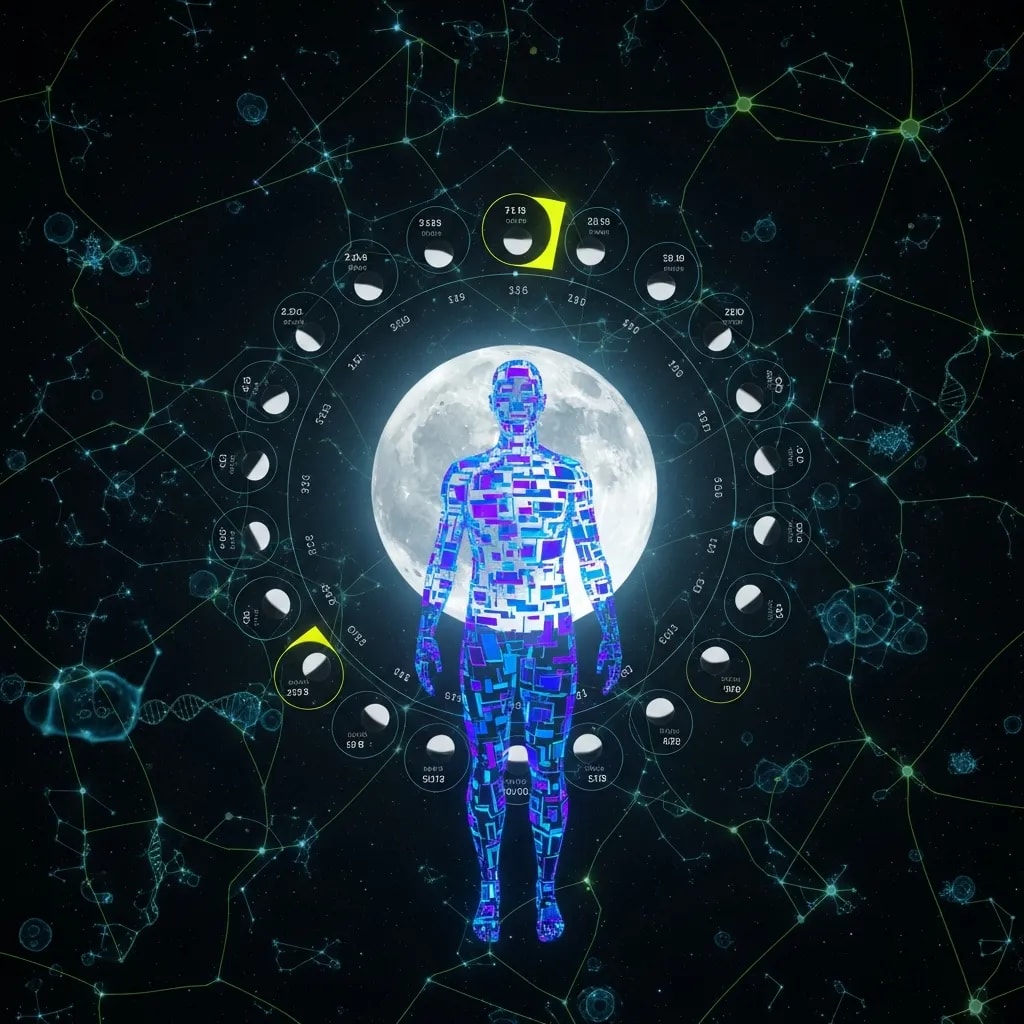
The Lunar Connection
For millennia, humans have gazed up at the moon and felt a connection. The word "lunatic" itself comes from the Latin *lunacus*, suggesting a link between the moon's phases and madness. Police officers and ER doctors often swap stories about "full moon nights" being more chaotic. But does the celestial body that drags our oceans' tides also tug at the water within us? The scientific community has debated this for decades.
Sleep and the Full Moon
One of the most compelling areas of research involves sleep. A highly cited study published in *Current Biology* found that under strictly controlled laboratory conditions—where participants had no view of the moon or knowledge of the current phase—sleep patterns changed significantly around the full moon. Participants took longer to fall asleep, slept for less time overall, and had 30% less deep sleep activity. This suggests an internal "circannual" rhythm that might be evolutionary hardwired, a remnant from a time when our ancestors needed to be more alert during bright moonlit nights to avoid predators.
Tides in the Blood?
The skeptical argument often points to gravity. While the moon's gravity is strong enough to move oceans, its effect on a human body is infinitesimal—roughly equivalent to the gravitational pull of a mosquito landing on your arm. Therefore, the "tidal" theory of biological influence holds little water (pun intended). If the moon affects us, it's likely not through gravity, but through light.
The Light Pollution Factor
Before the advent of artificial lighting, the full moon was the primary source of nocturnal illumination. It regulated hunting, social gatherings, and sleep cycles. In our modern world, we are bathed in blue light from screens and streetlamps, drowning out the subtle signals of the moon. However, some researchers argue that humans, like many other animals, possess cryptochromes—light-sensitive proteins involved in regulating circadian rhythms—that might still be sensitive to the specific spectrum of moonlight, even if we are largely unaware of it.
Mental Health and Behavior
Despite the "Transylvania effect" (the belief that full moons trigger aggression or madness), comprehensive meta-analyses of trauma center admissions and police reports have generally failed to find a statistically significant correlation between the full moon and increased crime or psychosis. The "chaos" observed by first responders is likely a case of confirmation bias—we notice and remember the crazy events that happen on a full moon because of the myth, while forgetting the equally crazy events that happen on a new moon.
Conclusion
While we may not turn into werewolves, the moon does seem to whisper to our biology, particularly our sleep architecture. It serves as a reminder that we are not separate from the cosmos but are creatures evolved under the rhythm of celestial spheres. In a world that never sleeps, paying attention to these ancient rhythms might be key to reclaiming our rest.

DC EDITORIAL
Expert analysis on biological data, temporal mechanics, and digital wellness. Committed to providing accurate, data-driven insights for the next generation.