Creatine Benefits: What the Science Actually Shows (Beyond Just Muscle)
Creatine is the most research-backed supplement in sports nutrition — but the evidence extends far beyond muscle mass. Here's the complete picture of what creatine does, the optimal dose, and who benefits most.
Why Creatine Is the Most Studied Supplement
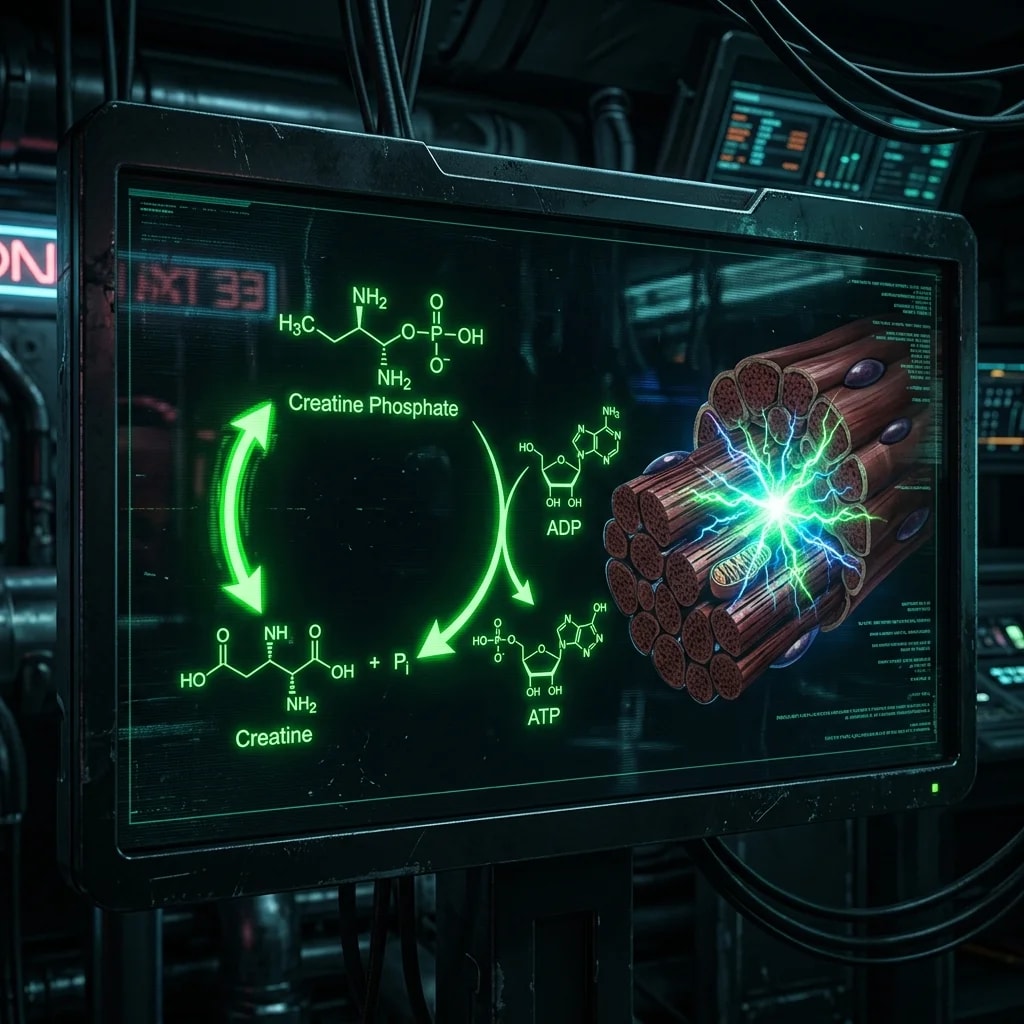
Creatine is an organic compound synthesized naturally in the body from arginine, glycine, and methionine — primarily in the liver, kidneys, and pancreas. The human body produces approximately 1–2g/day, with an additional 1–2g obtained from dietary meat and fish. Total body creatine stores: approximately 120g in a 70kg adult, with 95% stored in skeletal muscle as creatine phosphate (phosphocreatine).
Creatine supplementation has accumulated one of the largest research bodies of any ergogenic aid: over 500 peer-reviewed studies across 4+ decades. The International Society of Sports Nutrition (ISSN) classifies it as the safest and most effective nutritional supplement for improving high-intensity exercise capacity and lean body mass. Its mechanisms are among the best-characterized in nutritional biochemistry.
How Creatine Works: The ATP-PCr System
During maximal intensity exercise (sprinting, heavy lifting, explosive movements), your muscles require energy faster than aerobic metabolism can supply it. The primary fuel system for efforts lasting 1–10 seconds is the phosphocreatine (PCr) system: phosphocreatine rapidly donates its phosphate group to ADP, regenerating ATP at a rate no other pathway can match.
Supplemental creatine increases intramuscular phosphocreatine stores by 20–40%. This directly translates to:
- More ATP available for maximal effort bouts
- Faster PCr resynthesis during rest periods (better recovery between sets)
- Ability to sustain high-intensity output for longer before power drops
This is why creatine's effects are almost exclusively seen in high-intensity, short-duration activities — not endurance events where aerobic metabolism dominates.
Evidence-Rated Creatine Benefits
1. High-Intensity Exercise Performance — ⭐⭐⭐⭐⭐ Excellent
The most consistent finding across creatine research: supplementation increases peak power output, total work in repeated sprint sets, and strength during heavy resistance training by 5–15%. A 2003 meta-analysis of 22 RCTs found creatine improved strength by an average of 8% and power by 14% compared to placebo. Effect is most pronounced in untrained individuals and those with lower baseline dietary creatine (vegetarians).
2. Muscle Hypertrophy — ⭐⭐⭐⭐ Strong
Multiple meta-analyses confirm greater lean mass gains with creatine supplementation + resistance training versus training alone. The mechanism is multifactorial: increased training volume (more reps possible per set), cellular hydration (creatine pulls water into muscle cells, increasing cell volume — a signal for muscle protein synthesis), and possible direct anabolic signaling via mTOR activation.
3. Cognitive Performance and Brain Health — ⭐⭐⭐ Good
The brain uses significant ATP. Phosphocreatine buffers ATP in neurons similarly to muscle. RCTs show creatine supplementation improves working memory, processing speed, and mental stamina — particularly under sleep deprivation and cognitive stress. High-altitude research shows creatine reduces cognitive impairment from hypoxia. A 2022 systematic review (Rawson et al.) concluded creatine supplementation benefits brain function, especially in conditions of metabolic stress.
4. Aging and Sarcopenia Prevention — ⭐⭐⭐⭐ Strong
This is arguably the most underappreciated creatine benefit. In adults over 55, creatine + resistance training preserved lean mass, bone density, and functional strength more effectively than training alone. Natural muscle creatine content declines with age. A 2017 meta-analysis of 10 RCTs in older adults found creatine supplementation produced 1.37 kg additional lean mass gain versus placebo with training. Given the profound health consequences of sarcopenia (see related article), this application may be more important than athletic performance.
5. Depression and Mood — ⭐⭐⭐ Emerging
Creatine has demonstrated antidepressant effects in multiple small RCTs, particularly in women with major depressive disorder. Proposed mechanism: creatine restores brain energy metabolism dysregulation observed in depression. A 2021 meta-analysis found creatine supplementation significantly reduced depression scores versus placebo. Larger RCTs are underway, but the signal is promising.
6. Blood Glucose Management — ⭐⭐⭐ Moderate
Creatine increases GLUT4 transporter expression in muscle cells, improving post-exercise glucose uptake. RCTs in type 2 diabetes patients show creatine + exercise reduces HbA1c significantly more than exercise alone. An interesting application for the metabolically dysregulated population.
Dosing Protocol
| Protocol | Dose | Duration | Notes |
|---|---|---|---|
| Loading (fastest saturation) | 20g/day split into 4×5g doses | 5–7 days | Saturates muscles in 5–7 days; may cause GI upset |
| Standard maintenance | 3–5g/day single dose | Ongoing | Achieves saturation in 3–4 weeks; preferred for most |
| Conservative (older adults) | 3g/day | Ongoing | Same efficacy as 5g; minimal GI risk |
| Higher for vegetarians | 5g/day (start potential 10g) | Ongoing | Lower baseline stores; greater absolute benefit |
Form: Creatine monohydrate is the gold standard — cheapest, best-researched, identical efficacy to all "superior" alternatives (creatine HCl, buffered creatine, ethyl ester) in head-to-head trials. Timing: Post-workout supplementation may offer marginal advantages for muscle creatine uptake (due to increased insulin sensitivity post-exercise), but total daily intake matters far more than timing.
Safety and Common Concerns
- Kidney damage: Definitively disproven in healthy individuals with normal kidney function. 5 years of continuous creatine use shows no renal biomarker changes in multiple long-term studies. Contraindicated in individuals with pre-existing kidney disease.
- Hair loss: Based on a single small 2009 study showing DHT increase; not replicated. No clinical evidence of creatine accelerating androgenic alopecia.
- Bloating: Loading doses (20g/day) may cause GI distress. Maintenance doses (3–5g/day) are well-tolerated in most people.
- Water weight: Initial 1–2 kg weight gain is intramuscular water retention, not fat. Reflects creatine saturation and is functionally advantageous (cell hydration supports performance).
Track Your Body Composition Progress
Open Body Fat CalculatorFrequently Asked Questions
Does creatine actually work?
Yes — it is one of the few supplements where the mechanism of action, dose-response, and outcomes are definitively established. Over 500 studies and 4 decades of research confirm efficacy for high-intensity performance and lean mass. The ISSN, AIS, and most major nutrition bodies classify it as effective and safe.
Do you need to cycle creatine?
No — there's no research supporting creatine cycling (on/off periods). Continuous supplementation maintains elevated muscle creatine stores and does not down-regulate endogenous synthesis in a clinically meaningful way.
Who benefits most from creatine?
Vegetarians and vegans (who have no dietary creatine intake and 10–20% lower baseline stores), older adults (highest sarcopenia prevention potential), power athletes, and individuals under cognitive stress or sleep deprivation. Endurance athletes and those primarily doing low-intensity exercise see less benefit.

DC EDITORIAL
Expert analysis on biological data, temporal mechanics, and digital wellness. Committed to providing accurate, data-driven insights for the next generation.