Cortisol and Aging: How Chronic Stress Accelerates Biological Age
Cortisol is essential for survival — but chronically elevated, it accelerates nearly every biological aging pathway. Understanding the cortisol-aging connection reveals some of the most actionable longevity interventions available.
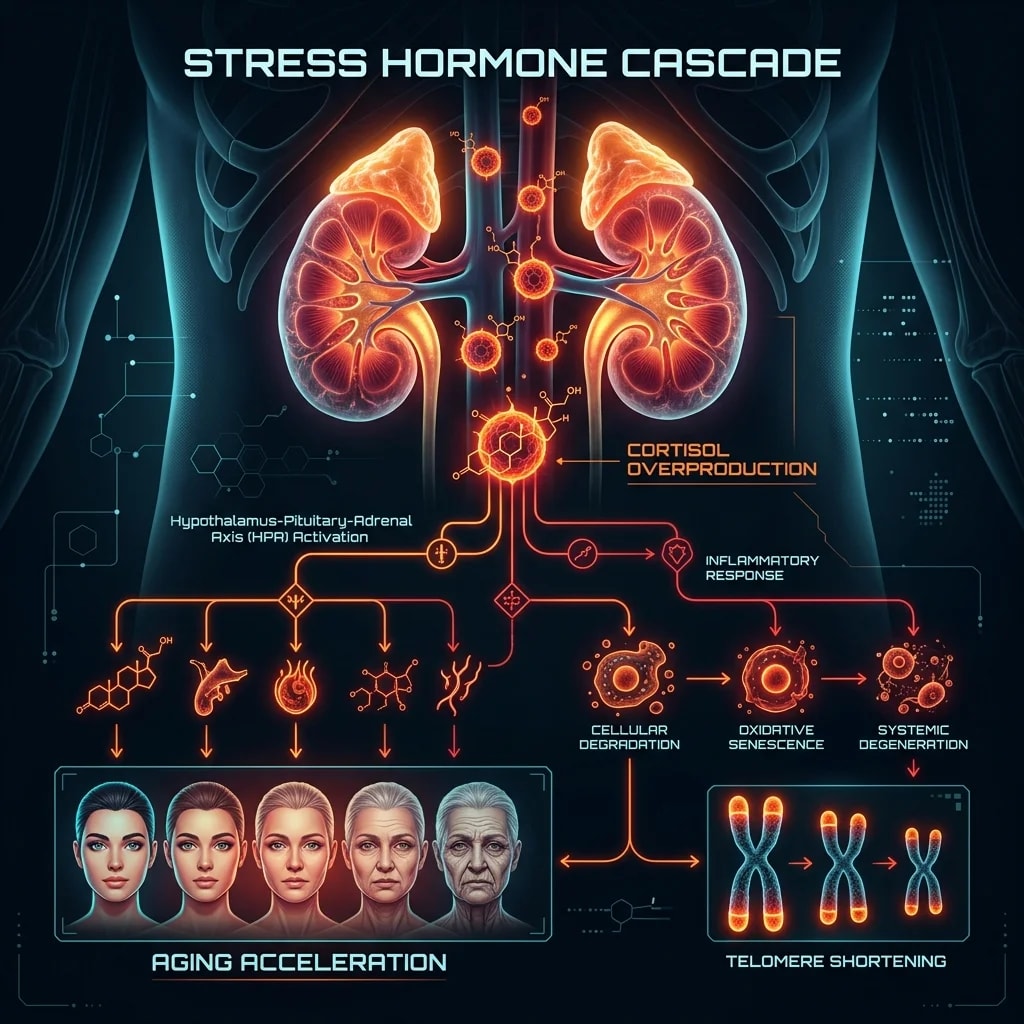
Cortisol: Friend and Enemy
Cortisol is your primary stress hormone, produced by the adrenal cortex in response to hypothalamic-pituitary-adrenal (HPA) axis activation. In acute stress, cortisol is essential and beneficial: it mobilizes glucose for energy, sharpens focus and alertness, temporarily suppresses non-essential functions (digestion, reproduction), and enables the fight-or-flight response that has kept humans alive for 300,000 years.
The problem is not cortisol itself — it is chronic cortisol elevation. When the stress response is continuously activated (psychological stress, sleep deprivation, inflammation, blood sugar dysregulation), cortisol runs at persistently elevated levels, and its acute benefits become chronic liabilities that accelerate aging across virtually every biological system.
How Chronic Cortisol Accelerates Aging: 6 Mechanisms
1. Telomere Shortening
Cortisol inhibits telomerase — the enzyme that maintains and repairs telomere length. Chronic cortisol elevation is consistently associated with shorter telomeres in cohort studies. Telomere shortening is one of the primary hallmarks of biological aging. A 2004 landmark study of caregivers (UCSF) showed that women experiencing chronically high psychological stress had telomeres equivalent to 10 additional years of aging versus low-stress controls.
2. Inflammatory Acceleration (Inflammaging)
Paradoxically, though cortisol is acutely anti-inflammatory, chronic elevation leads to glucocorticoid resistance — immune cells become desensitized to cortisol's inflammatory suppression signals. The result: elevated NF-κB activity, higher IL-6 and TNF-alpha, and a chronic background inflammatory state. This process, called "inflammaging," is the unifying biology of accelerated aging and most age-related chronic diseases.
3. Hippocampal Atrophy
The hippocampus — the brain's memory and spatial navigation center — has the highest density of cortisol receptors of any brain region. Chronic cortisol excess produces measurable hippocampal volume reduction. Studies of individuals with PTSD, major depression, and Cushing's syndrome (pathologically high cortisol) all show hippocampal shrinkage, impaired memory, and accelerated cognitive aging. This effect is partially reversible with stress reduction interventions.
4. Insulin Resistance
Cortisol raises blood glucose via multiple mechanisms (hepatic gluconeogenesis, peripheral insulin resistance, lipolysis from fat cells). Chronic elevation produces sustained insulin resistance independent of diet — replicating the metabolic picture of early type 2 diabetes. High cortisol is a primary mechanism linking chronic psychological stress to metabolic disease.
5. Testosterone and Growth Hormone Suppression
Cortisol and testosterone have a direct antagonistic relationship — cortisol suppresses the HPG axis (hypothalamic-pituitary-gonadal axis), reducing testosterone production. Similarly, cortisol suppresses growth hormone release, reducing tissue repair and protein synthesis. These hormonal suppressions mimic and accelerate the natural endocrine changes of aging.
6. Visceral Fat Accumulation
Visceral adipocytes (deep abdominal fat cells) have high cortisol receptor density and preferentially accumulate fat in high-cortisol states. This is the mechanism behind the "apple-shaped" fat distribution pattern associated with chronic stress, Cushing's syndrome, and metabolic risk. Visceral fat itself then becomes an inflammatory organ, creating a self-reinforcing cycle of cortisol → visceral fat → inflammation → more cortisol.
Normal vs. Chronically Elevated Cortisol
| Measurement | Normal (Morning Peak) | Normal (Evening Trough) | Chronically Elevated |
|---|---|---|---|
| Serum cortisol | 6–23 µg/dL | 2–6 µg/dL | Elevated, flattened diurnal curve |
| Salivary cortisol (AM) | 0.094–1.551 µg/dL | Low | Elevated AM + blunted evening drop |
| 24-hr urinary free cortisol | 4–50 µg/day | — | >50 µg/day suggests HPA dysregulation |
The hallmark of HPA dysregulation is a blunted diurnal cortisol curve — the normal steep morning peak and evening trough become flattened. This pattern is associated with poor health outcomes in multiple large studies even when absolute cortisol levels remain within "normal" ranges.
7 Evidence-Based Cortisol Reduction Strategies
1. High-Quality Sleep (Most Impactful)
Sleep deprivation elevates cortisol by 15–37% the following day. Cortisol and sleep have a bidirectional relationship — elevated cortisol disrupts sleep architecture, and poor sleep elevates cortisol. Breaking this cycle via sleep improvement is the highest-yield single intervention. Prioritize 7–8 hours with consistent timing.
2. Regular Aerobic Exercise
Paradoxically, exercise acutely raises cortisol (it is a physiological stressor) but consistently reduces basal cortisol levels through two mechanisms: improved HPA axis regulation (the stress response becomes more efficient and returns to baseline faster) and increased DHEA production (a cortisol counterbalancing hormone).
3. Mindfulness Meditation
A 2013 meta-analysis of 45 studies found mindfulness-based interventions significantly reduced salivary cortisol, CRP, and other stress biomarkers. Even 8 weeks of MBSR (Mindfulness-Based Stress Reduction) produces measurable grey matter increases in hippocampal regions previously damaged by stress.
4. Phosphatidylserine Supplementation
One of the few supplements with direct clinical evidence for cortisol reduction. Multiple human trials show 400–800mg/day blunts the cortisol stress response by 20–30% in exercise-induced stress paradigms. Acts as a phospholipid precursor in the HPA feedback loop.
5. Ashwagandha (KSM-66 extract)
A 2019 double-blind RCT found 600mg/day KSM-66 ashwagandha reduced serum cortisol by 27.9% versus placebo over 8 weeks. Also showed reduced perceived stress scores, improved sleep quality, and improved testosterone in men. Strongest evidence of any adaptogen supplement for cortisol reduction.
6. Blood Sugar Stabilization
Blood sugar crashes (hypoglycemia) are physiological stressors that acutely activate HPA axis and spike cortisol. High-glycemic diets cause repeated cortisol spikes throughout the day. A low-glycemic, protein-rich diet prevents these crashes and reduces total daily cortisol burden significantly.
7. Social Connection and Nature Exposure
Oxytocin (released via social bonding and physical touch) directly suppresses cortisol and HPA axis hyperactivity. Forest bathing (Shinrin-yoku) — walking in natural environments — has demonstrated salivary cortisol reductions of 12.4% in Japanese clinical trials. Even 20 minutes in natural settings significantly blunts cortisol in urban stress paradigms.
Check Your Body Composition — A Key Cortisol Marker
Measure Visceral Fat RiskFrequently Asked Questions
Does chronic stress make you age faster?
Yes, measurably. Chronic stress elevates cortisol, which shortens telomeres, promotes inflammaging, shrinks the hippocampus, causes visceral fat accumulation, and suppresses repair hormones. Studies of caregivers, PTSD patients, and chronically stressed populations all show accelerated epigenetic aging equivalent to years of added biological age.
How do you know if your cortisol is too high?
Symptoms of chronic cortisol elevation: persistent fatigue despite adequate sleep, abdominal weight gain, poor recovery from exercise, worsened memory, decreased libido, frequent illness (immune suppression), anxiety and irritability. Formal confirmation via morning serum cortisol, 24-hour urinary free cortisol, or salivary diurnal cortisol curve with a physician.
What lowers cortisol fastest?
The fastest acute cortisol reducers: diaphragmatic breathing (physiological sigh — extended exhale activates parasympathetic tone), cold water face immersion (diving reflex), and removing yourself from the stressor environment. For chronic reduction, sleep quality improvement has the highest-magnitude effects over 2–4 weeks.

DC EDITORIAL
Expert analysis on biological data, temporal mechanics, and digital wellness. Committed to providing accurate, data-driven insights for the next generation.