Body Fat Percentage by Age: The Complete Reference Guide (2026)
What is a healthy body fat percentage for your age? From your 20s through your 60s, the targets change — and most people don't know theirs. Here's every number you need, backed by research.
Why Age Changes Everything in Body Composition
Your body fat percentage isn't a static number you carry through life. From your 20s through your 60s, your body's relationship with fat fundamentally shifts — driven by hormonal changes, muscle mass loss (sarcopenia), and metabolic slowdown. What was "athletic" at 25 may be classified as "acceptable" at 55, and the health implications change with each decade.
This guide gives you the definitive reference charts, explains the mechanisms behind each shift, and shows you how to measure your current percentage accurately using the US Navy method calculator.
The Gold Standard Charts: Body Fat % by Age and Sex
The American Council on Exercise (ACE) and the American College of Sports Medicine (ACSM) provide the most widely cited classification systems. Here are the evidence-based ranges:
Men — Body Fat % by Age
| Category | Age 20–29 | Age 30–39 | Age 40–49 | Age 50–59 | Age 60+ |
|---|---|---|---|---|---|
| Essential | 2–5% | 2–5% | 2–5% | 2–5% | 2–5% |
| Athletic | 6–13% | 8–14% | 10–16% | 12–18% | 14–19% |
| Fitness | 14–17% | 15–19% | 17–21% | 18–22% | 19–23% |
| Acceptable | 18–25% | 20–26% | 22–27% | 23–28% | 24–29% |
| Obese | 26%+ | 27%+ | 28%+ | 29%+ | 30%+ |
Women — Body Fat % by Age
| Category | Age 20–29 | Age 30–39 | Age 40–49 | Age 50–59 | Age 60+ |
|---|---|---|---|---|---|
| Essential | 10–13% | 10–13% | 10–13% | 10–13% | 10–13% |
| Athletic | 14–20% | 15–21% | 17–23% | 18–24% | 19–25% |
| Fitness | 21–24% | 22–25% | 24–27% | 25–28% | 26–29% |
| Acceptable | 25–31% | 26–32% | 27–33% | 28–34% | 29–35% |
| Obese | 32%+ | 33%+ | 34%+ | 35%+ | 36%+ |
Why These Ranges Shift Upward with Age
Sarcopenia: The Silent Muscle Thief
After age 30, adults lose 3–5% of muscle mass per decade — a process called sarcopenia. Less muscle means a slower resting metabolism. Even if your diet stays identical, your body stores more calories as fat just to maintain daily energy balance. This is why body fat percentages that indicate "athletic" in your 20s are nearly impossible to maintain in your 50s without deliberate intervention.
Hormonal Shifts
In men: Testosterone levels decline approximately 1% per year after age 30. Testosterone actively promotes muscle protein synthesis and inhibits fat storage. Lower testosterone = slower metabolism and higher fat deposition, particularly in the abdomen.
In women: Perimenopause and menopause (typically ages 45–55) trigger significant hormonal changes. Estrogen reduction redistributes fat from the hips and thighs (gynoid/pear shape) to the abdomen (android/apple shape) — increasing visceral fat that carries cardiovascular risk. Many women who maintained a healthy body fat percentage for decades find their composition shifting significantly in their late 40s despite no lifestyle changes.
Visceral Fat Accumulation
Age-related hormonal changes disproportionately increase visceral fat — the metabolically active, inflammation-promoting fat stored around internal organs — rather than subcutaneous fat you can pinch. This shift is health-critical: visceral fat is the fat responsible for metabolic syndrome, insulin resistance, and cardiovascular disease, not the fat sitting under your skin.
How to Measure Your Body Fat Percentage Accurately at Home
There are multiple measurement methods, each with different accuracy profiles:
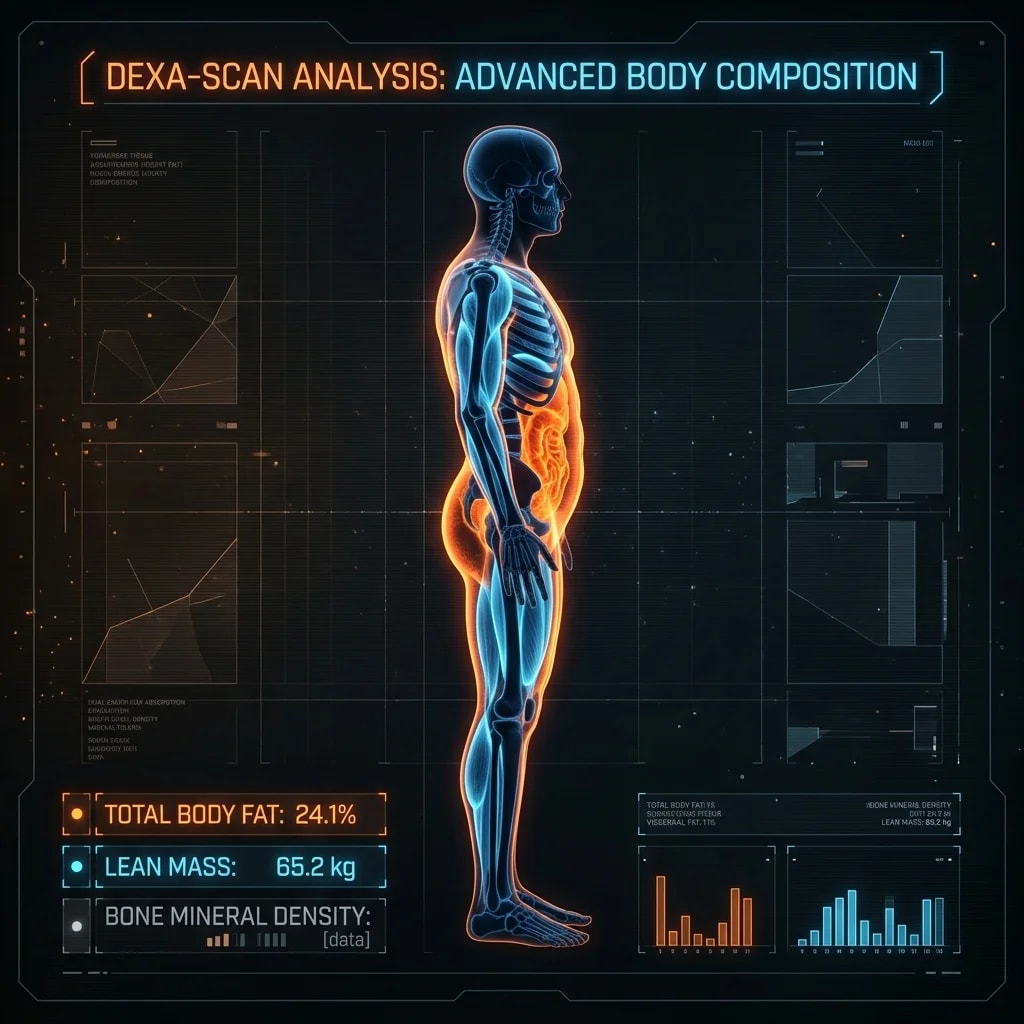
- DEXA Scan: Gold standard (±1-2% accuracy). Requires clinic visit and costs $50–200.
- Hydrostatic Weighing: Near-gold-standard but requires specialized tank.
- BIA Smart Scales: Convenient but highly variable (±3–8%) depending on hydration.
- US Navy Circumference Method: Tape measure only, ±1–3% accuracy. Free and repeatable. Calculate yours now →
- Skinfold Calipers: Accurate when done by trained technician (±3–4% in expert hands).
For most individuals, the US Navy method offers the best combination of accuracy, zero cost, and repeatability — making it ideal for tracking trends over time, which is ultimately more valuable than a perfectly precise single measurement.
Strategies to Optimize Body Composition at Every Age
Your 20s: Build Your Foundation
Muscle mass and bone density are easiest to build in your 20s. Prioritize heavy compound resistance training (squat, deadlift, bench, row) at least 3x/week. Even if your current body fat is healthy, the muscle mass you build now directly determines how well you age metabolically.
Your 30s: Defend What You Built
Muscle loss begins. Counter it by increasing protein intake to 0.8–1.0g per pound of body weight and maintaining resistance training. Consider adding creatine monohydrate (5g/day) — the most evidence-supported supplement for preserving muscle in the third decade.
Your 40s: The Critical Decade
Hormonal shifts and metabolic slowdown accelerate. Prioritizing sleep (7–9 hours) becomes as important as training. Zone 2 cardio (150+ minutes/week of low-intensity aerobic work) specifically targets visceral fat reduction. Annual body fat measurements become more predictive of health risk than annual weight measurements.
Your 50s and Beyond: Muscle is Medicine
Sarcopenia becomes clinically significant. Resistance training is now the single most important health intervention — not just for aesthetics, but for fall prevention, glucose regulation, and maintaining independence. A 2022 JAMA meta-analysis found that resistance training 2x/week reduces all-cause mortality by 23% in adults over 50.
Know Your Body Fat % Right Now
Launch US Navy Body Fat CalculatorFrequently Asked Questions
What is a healthy body fat percentage for a 40-year-old man?
For men in their 40s, the fitness-range body fat is 17–21%. Athletic would be 10–16%, which requires consistent training. Above 28% is considered obese at this age.
Does body fat naturally increase with age?
Yes. Sarcopenia (muscle loss), hormonal changes, and metabolic slowdown all cause natural body fat accumulation with age, even without changes in diet or exercise. The reference ranges above account for this by shifting upward each decade.
What is the most accurate way to measure body fat at home?
The US Navy circumference method is the most practical and accurate home method, with 1–3% accuracy. It requires only a flexible measuring tape and our free calculator.

DC EDITORIAL
Expert analysis on biological data, temporal mechanics, and digital wellness. Committed to providing accurate, data-driven insights for the next generation.